
Why You’re Probably Not Ready for the Nike Alpha Fly (Yet)
The New Runner Moment We All Know
If you’re reading this, you’re probably excited — maybe even fired up — about your next big running goal. Maybe it’s your first marathon. Maybe you’re coming back after a long break. Maybe you just want to feel like “a real runner.”
So you buy the outfit, download the training plan, and treat yourself to the watch that has more buttons than your car dashboard.
And then you see them:
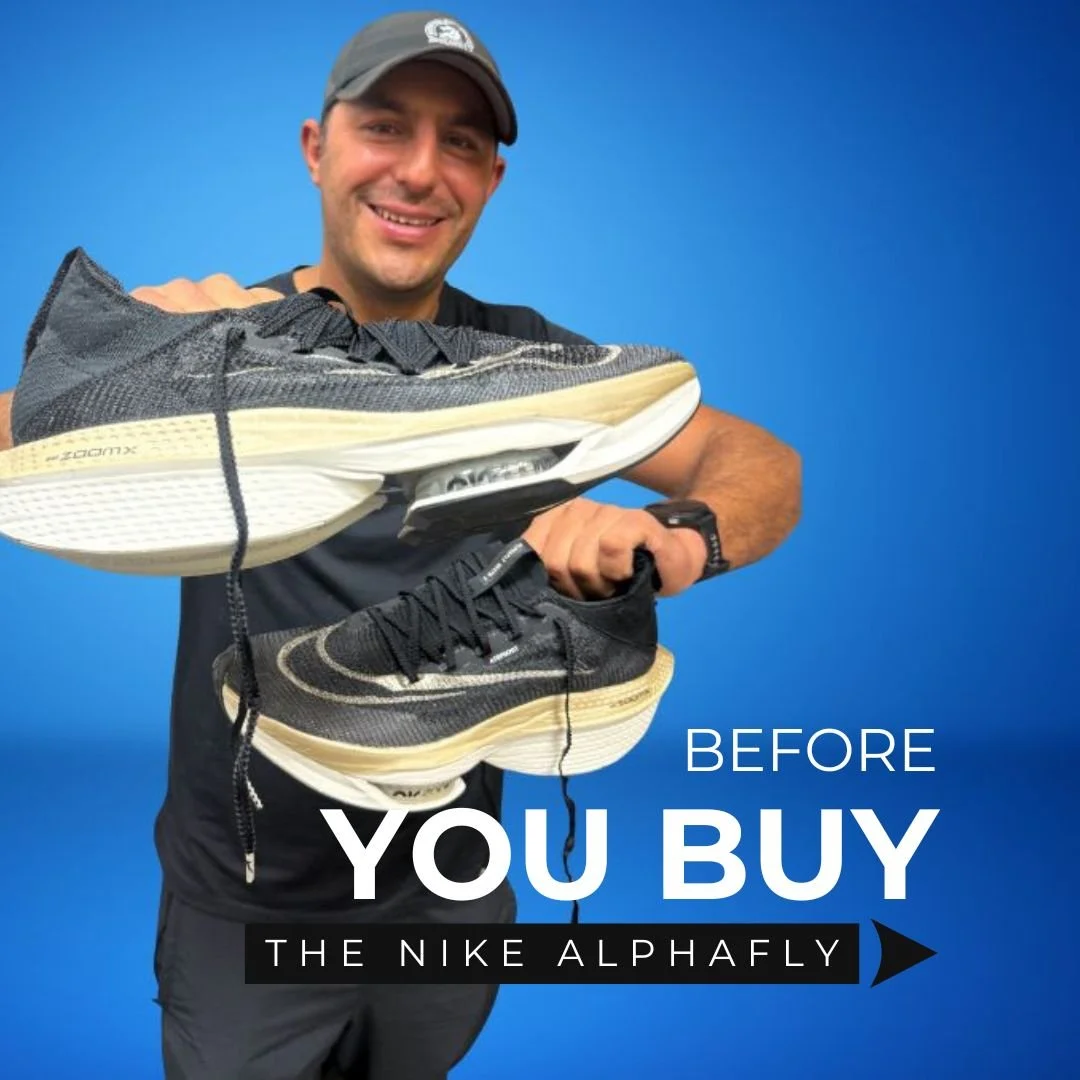
the Nike AlphaFly.
Bright, loud, bouncy, and all over your Instagram feed.
You hover over that “Add to Cart” button thinking,
Everyone fast wears these. Maybe I should too.
But before you buy them, I want you to pause.
Not because the shoes are bad — they’re incredible, actually — but because they’re not meant for where most new runners are in their journey.
Why New Runners Jump to Super Shoes
It’s normal. You see a crowded race corral and everyone seems to be wearing the same neon carbon-plated shoe. You see TikToks telling you they’re “worth 3 minutes off your marathon.” You see friends wearing them and you don’t want to feel left out.
And you think:
If I’m serious about running, I should buy what serious runners wear.
The problem is, the people wearing those shoes usually have years of running behind them. Their bodies have adapted. Their feet, ankles, calves, hips — all of it — are strong enough to handle what that shoe demands.
You put them on too early, and instead of helping, the shoe exposes every weakness you didn’t know you had.
Gear Doesn’t Build You — Movement Does
Here’s something most beginners don’t realize:
Buying more gear doesn’t make you better.
Running better makes you better.
You can buy ten pairs of shoes, three running backpacks, and the fanciest watch on the market — but if your body isn’t strong, mobile, and trained to handle running, none of it matters.
The real improvement comes from:
learning how to land softly
building strong calves and ankles
improving hip mobility
consistent, easy aerobic running
learning your body’s rhythm
strength training
patience
The AlphaFly can’t give you those things.
But you can build them over time.
When You Are Ready for the Nike AlphaFly
You’ll know you’re ready when running feels connected — when your feet, calves, hips, and arms feel like they’re working together, not against each other.
You’re ready when:
You’ve been consistent for months
You can run an hour comfortably
Your calves don’t tighten after every run
Your ankles feel stable, not wobbly
You can handle workouts like tempo runs or race-pace miles
You’re thinking about a personal record, not just surviving the distance
The AlphaFly is a tool for runners who have already built the engine — runners who know how to use speed, not just feel it.
What Happens When You Wear the AlphaFly Too Soon
Carbon shoes like the AlphaFly put you on your midfoot, almost like a tiny high heel. They’re stiff, with almost no flexibility. This design is amazing if you’re strong enough for it.
If you’re not?
Every weakness shows up:
Your ankle wobbles
Your arch collapses
Your calves tighten
Your shins hurt
Your toes jam
Your knees complain
Your back might even get involved
The shoe might make you feel fast at first, but that “fast” is borrowed.
It’s speed your body can’t support. And sooner or later, your body sends the bill.
Most of the time?
That bill is an injury.
What You Should Wear Instead
Start with the shoe that matches your foot. Not your friend’s foot. Not your favorite influencer’s foot.
Your foot.
If you:
Pronate → you need stability
Have a neutral arch → you need a neutral shoe
Have a high arch → you need cushioning and flexibility
These shoes support your body while you’re learning how to run well. They help you build strength. They help you absorb impact. They help you stay healthy long enough to enjoy the sport.
Once your body is ready, then the AlphaFly becomes a fun upgrade — not a painful mistake.
Building Speed Comes Before Buying Speed
Here’s a truth that gets lost in all the hype:
Yes, the AlphaFly can make you faster.
But only if you’ve already built the strength to handle the speed it gives you.
If you don’t have:
strong calves
strong shins
mobile ankles
stable hips
good form
…the shoe won’t help you.
It just makes the work harder.
Real speed comes from your body, not your shoes.
You build it long before you buy it.
Why Coaching Matters So Much More Than Gear
I see runners spend hundreds on shoes, watches, and race entries…
but skip the one thing that actually helps them improve: coaching.
It’s like buying the jersey, paying for the game, but never learning the rules.
Without guidance, most runners:
run too hard
overstride
collapse at the feet
lose hip control
fatigue early
get injured
quit the sport
With a coach, everything changes.
You learn how to move.
You learn why your body does what it does.
You build strength in the right places.
You stay injury-free.
And you enjoy running — really enjoy it.
That joy is worth more than any shoe.
Final Word
The Nike AlphaFly isn’t your first step.
It’s more like your tenth.
Build the runner first.
Strengthen your body.
Learn your form.
Find your rhythm.
Stay consistent.
And when you’re ready — truly ready — you’ll feel it.
And the shoe will feel like an upgrade, not a gamble.
Build the foundation.
Then fly.
AlphaFly FAQ for Runners
1. Should beginners wear the Nike AlphaFly?
No. The Nike AlphaFly is a carbon plate super shoe designed for advanced runners with strong calves, stable ankles, efficient form, and consistent mileage. Beginners are more likely to get injured than faster.
2. Why can the Nike AlphaFly cause injuries in new runners?
Because it forces a midfoot landing, increases calf and Achilles load, and demands strong ankle stability. Beginners usually don’t have the strength or mobility to control the shoe safely.
3. Who is the Nike AlphaFly best for?
Experienced runners with medium to high arches, strong calves, mobile ankles, and a training history that includes tempo runs, race-pace work, and consistent long runs.
4. What should new runners wear instead of carbon plate running shoes?
A neutral, stability, or cushioned daily trainer chosen based on foot type (pronation, arch height) and comfort. These shoes help build strength and reduce injury risk.
5. Can super shoes make you faster?
Yes — but only if your body is strong enough. Carbon shoes improve efficiency for runners with solid form and strength. Without that foundation, they create instability and fatigue.
6. When is the right time to buy the Nike AlphaFly?
When you can comfortably run an hour, complete workouts at different paces, maintain stable form, and are training toward a personal record or competitive marathon goal.
7. What’s the easiest way to get ready for super shoes?
Focus on calf strength, shin strength, single-leg stability, mobility in the ankles and hips, consistent aerobic running, and learning proper running form — ideally with a coach.